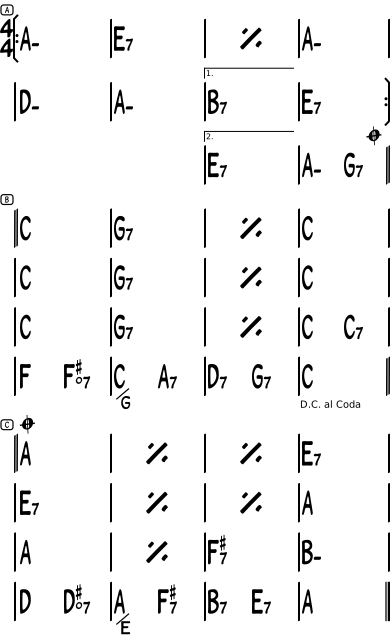
“Tico-Tico no Fubá” is a Brazilian choro composed by Zequinha de Abreu in 1917, with Portuguese lyrics later written by Aloysio de Oliveira. Originally titled “Tico-Tico no Farelo,” it was renamed in 1931 to avoid duplication with a work by guitarist Américo Jacomino, known as Canhoto. Carmen Miranda was the original performer and recorded the piece in 1917. Conceived as an instrumental, it has become a staple of Brazilian popular repertoire, valued by players for its quick, rhythmically animated choro character and virtuosic melodic motion.
The first recording was made by Orquestra Colbaz in 1931. The tune became especially popular outside Brazil during the 1940s through recordings by Carmen Miranda, Ethel Smith, the Andrews Sisters, and Alys Robi. Smith’s Hammond-organ performance in the 1944 MGM film Bathing Beauty led to a U.S. pop hit that peaked at No. 14 in 1945. English lyrics were written by Ervin Drake for the Andrews Sisters’ version. Later instrumental interpretations include Paco de Lucía’s 1967 guitar recording and arrangements for accordion, piano, orchestra, and jazz guitar.