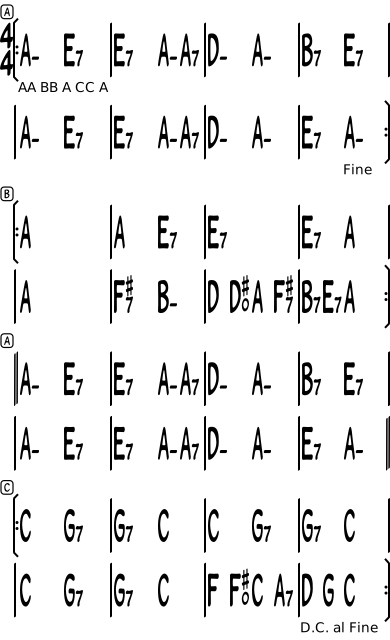
"Tico-Tico no Fubá" is a Brazilian choro, an instrumental piece composed by Zequinha de Abreu (1880-1935). It was published in 1917 as "Tico-Tico no farelo" and renamed "Tico-Tico no Fubá" in 1931, because another work already bore the earlier title. Aloysio de Oliveira later wrote Portuguese lyrics. The first recording was made in 1931 by Orquestra Colbaz for Columbia on a 78 rpm disc. The tune is in bright duple time and is widely played by jazz, Latin and gypsy jazz musicians, including Stéphane Grappelli and Gary Burton.
The song became internationally known in the 1940s. Ethel Smith's Hammond organ version, heard in the MGM film Bathing Beauty (1944), reached the US pop charts, peaking at No. 14 in January 1945, and sold nearly two million copies. The Andrews Sisters recorded it in 1944 with English lyrics by Ervin Drake, and Carmen Miranda, Xavier Cugat, Charlie Parker and Desi Arnaz also recorded it. It appears in films including Rio Rita, Thousands Cheer, The Gay Senorita, Copacabana and Radio Days, and it was used at the closing ceremony of the 2016 Summer Olympics.